
When the British Women’s Temperance Association (BWTA) was formed in 1876, it’s Constitution set out the object of the association. Its object was to form a federation of existing Women’s Temperance Societies from across the country and by combined effort, greater work could be achieved in the cause of Temperance. Their aim was ultimately, the control and suppression of the liquor trade, which they believed would result in the moral and religious elevation of people.
The women of the BWTA believed that temperance work was especially suitable as ‘women’s work’. They held the strong belief that the ‘vice of drink’, bore its heaviest weight on women, daughters, wives and mothers. They believed that women were the ones most likely to suffer through its influence by driving fathers, sons, brothers and husbands to an onward course of ‘disease, poverty, wretchedness, crime, social degradation….and death eternal.’
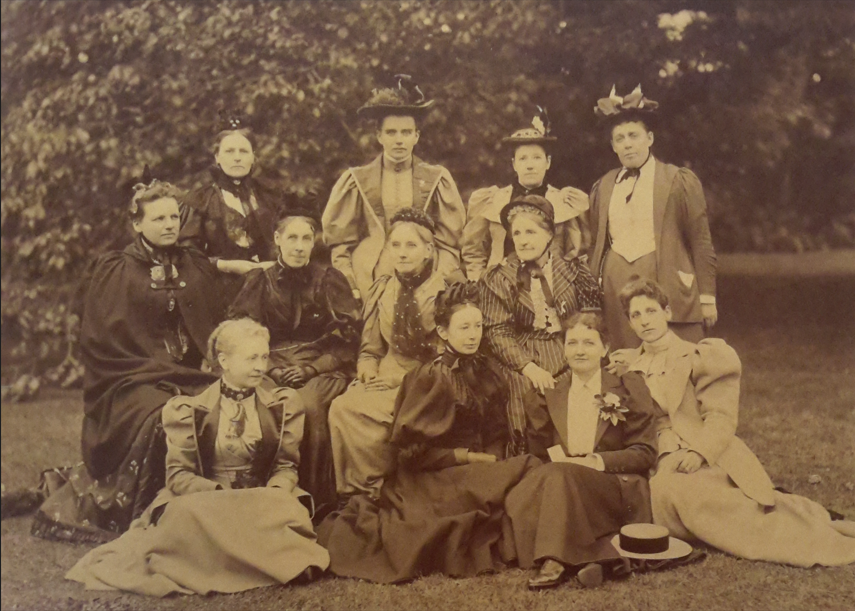
A letter from one member during the BWTA’s founding year, declared, ‘It is a simple truth – though men may have long travel between birth and death – that ‘those who rock the cradle rule the world.’’ These women maintained that by combining forces, they were strong enough and powerful enough to be able to bring about positive change to the life of women and children affected by what they saw as the evils of the liquor trade.
An example of the burden endured by women during this period, was the employment of women in the Black Country, though there would have been many other examples across the country. The working conditions and lives of the women employed in iron manufacture in the Black Country were highlighted in the newspapers of 1875, following evidence gathered by Factory Inspectors. The reports directly linked the difficulties endured by these women, to the drinking habits of their husbands. It was stated that some workers were even paid, not in money but in beer or gin. Reports such as this would have provided the BWTA with enough evidence that their campaign against the liquor trade was necessary and justified.
There was shock that women should be engaged in such hard, gruelling work as nail and chain making but the inspectors also expressed concern for ‘feeble handiwork’ and consequently the possibility of weak iron being introduced into chain made for the Government. There was a perception that only men could produce a product of good enough quality. Ultimately though, it was felt that ‘….to degrade and unsex (women) by toil which is the province of the strongest members of the rudest sex’, was not in accordance with ‘common justice or common decency’.
Reporting of the time indicated that these women were being forced into this working position and taking the place of fathers and husbands, while the men were ‘idle and drunken’. When faced with a husband who was unable or unwilling to work to support his family and children who were half-starving, the women had little option but to take up work that was available to them, even if it was arduous physical labour, working night and day for minimal pay. It was reported that twelve to fourteen hours at the wash tub would match ten hours of chain making for exhaustion.
These women did not accept this situation for themselves or their children with ease and enquired of the Inspector what he could do to make the ‘men work more and the women less’. The Inspector was aware that it was out of absolute necessity for these women and their children to survive and was clear in his belief that the root of the situation was drunkenness, with the ‘ought-to-be breadwinner…. luxuriating in some public- house.’
This situation was certainly not confined just to the nail and chain trades or the Black Country alone. The writer of a letter to a newspaper of the time wrote that ‘….idle and vicious husbands and fathers who squander their earnings and leave their wives to maintain their families are, unfortunately, to be met with elsewhere…. They abound wherever there is free access to the beer barrel and the spirit bottle.’
A woman interviewed by the Factory Inspector spoke of having to ‘keep’ her husband by working in a brick yard whilst also giving him money for drink. He relayed reports of lazy young men specifically looking for skilled and industrious wives, in order to obtain an easy life. Drinking could debilitate these men, who would then lose ability in their working craft, whilst his wife slaved and toiled for their children.
Even advanced pregnancy and childbirth did not allow down time for these hardworking women. A woman working in a brickyard near Bilston who was looking particularly unwell was questioned by her manager (thinking she had been drinking during the night), about why she looked so ill. She replied, ‘No more would you, if you had had a child during the night.’ It paints a vivid picture of what these women endured. It was not an isolated incident though, for many others would have suffered similarly in densely over-populated manufacturing towns and districts, where poverty was driven by the effects of drink.
What was the remedy?
There were calls for further amendments to the Factory Act to prevent women from undertaking work of this nature but it was also recognised that they had to make a living somehow. Any restrictions placed on the labour of working women would only punish them further by depriving their families of the little wages they were able to make.
Alongside the outcry around the type of work the women were undertaking and the call for restrictions, was the recognition that there should be some corresponding law to force their husbands to work. The Suffrage Journal stated that the true remedy ‘lies not in punishing women for maintaining themselves, but in compelling men to fulfil their obligations to maintain their wives and families.’ They spoke of magistrates being empowered to order a man to pay his wife if he neglected to provide for his family, in the same way that deserted wives were granted protection or the support issued for women with illegitimate children. In this way they saw that the wages of the breadwinner would not be ‘absorbed in the public-house’.
Although we can establish from these reports that there was a heavy burden on women, there may have been a proportion of women who took a different view on their employment, such as the woman working on a pit bank in Wigan. This woman toiled from daylight to dusk among the coal heaps but when asked if she liked her work, replied that she would rather be doing that than standing over a wash tub all day. It might be safe to assume that this view was likely held by only a small minority of the women undertaking hard manual jobs in order to feed their starving families, especially if their husbands were drinking away their earnings.
When Mrs Margaret Parker was rallying the women of the countries’ temperance societies to come together in 1876, under the auspices of the BWTA, she hoped their efforts would ease the wrongs that women were suffering through the effects of the liquor traffic on their homes. Alongside Mrs E.D. (Mother) Stwart of the United States of America, she urged Christian women to rise together to do all they could ‘in the power of God’, to sweep the scourge of the drink traffic from the land. By their combined effort, they steadfastly believed that those who rocked the cradle really did rule the world and could make a positive difference.
Sources:
White Ribbon Association: Archive of the British Women’s Temperance Association
British Newspaper Archives – https://www.britishnewspaperarchive.co.uk/