
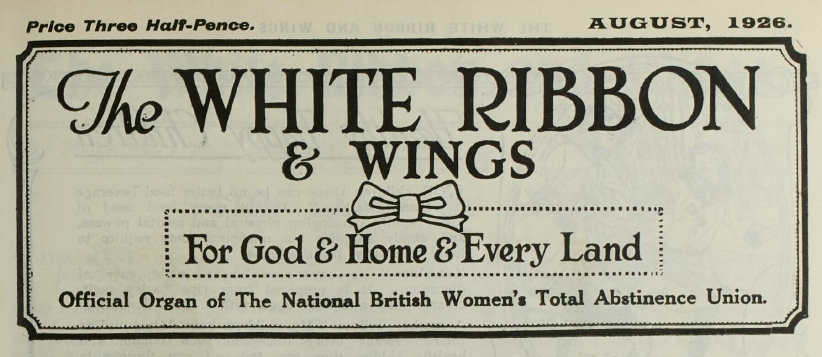
I thought it might be interesting to look back to one of our periodicals from 100 years ago, to get an insight into the work of the women of the National British Women’s Total Abstinence Union (NBWTAU) in 1926.
This was the year that Queen Elizabeth II was born and the year that the 9 day long National General Strike took place, in support of the coal miners facing wage cuts and longer hours. It was also the period of Prohibition in America.
In this y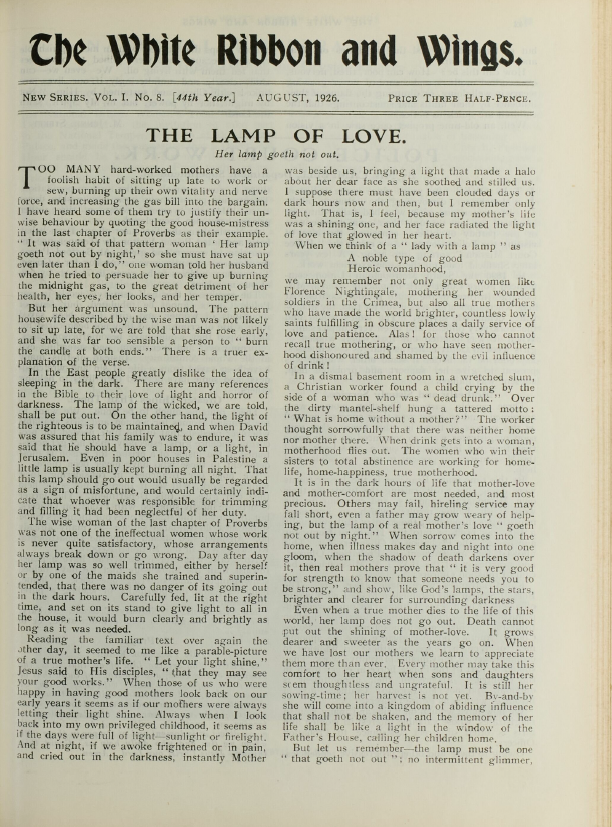 ear, the ‘official organ’ of the NBWTAU was titled ‘The White Ribbon and Wings’.
This periodical was published as a way of circulating the news and work of the association to both its women members across the country and to anyone taking an interest in the campaign for temperance.
In August of 1926 this publication cost Three Half-Pence (1½d) to buy. Spending 1½d out of an average 1926 wage was equivalent to spending about £1.60 from an average weekly full-time wage today.

Originally founded in 1876 as the British Women’s Temperance Association, both the NBWTAU and its periodical had gone through several name changes by the time it reached 1926. The headquarters of the NBWTAU was in Gower Street, London and branches were spread across the country with member numbers reaching over 164,400.
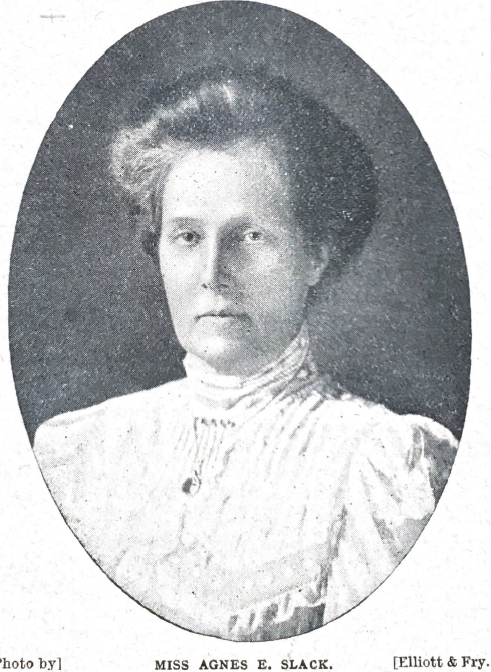
Miss Agnes Slack President BWTA
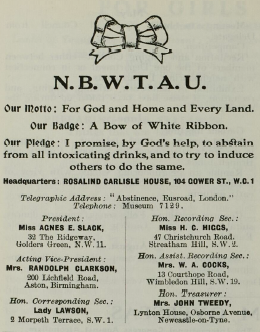
In 1926, Miss Agnes Slack (pictured), was the President of the NBWTAU. Members who joined signed a pledge – ‘I promise, by God’s help, to abstain from all intoxicating drinks, and to try to induce others to do the same’. The women of the NBWTAU were keen to rid society of what they saw as the ‘evils’ of the drink trade and the effects that they had on family life and society in general.
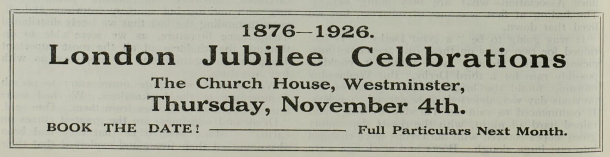
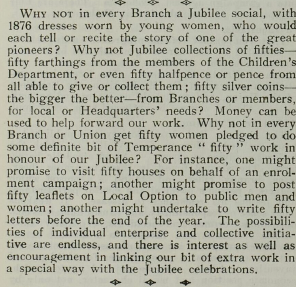
1926 was a significant year in the history of the organisation, as it was 50 years since its beginnings as the British Women’s Temperance Association in 1876.
They were finding ways to mark this celebration year, which included social gatherings where members would dress in the fashion of their founding year of 1876.
The work of the NBWATU was not limited to their temperance campaign against the use and sale of alcohol. Since the beginning of the BWTA, these women were involved in highlighting and campaigning for the improvement of wider societal issues, as can be seen when we look closer at the 1926 White Ribbon and Wings magazine…

Mrs Campbell, Superintendent for the department of Police Court Work provides a report of the Police Court Missionary work and its history.
Fifty years prior to 1926, women in Manchester conceived the idea of visiting the Police Courts, after discovering the plight of the women and girls who had fallen into the hands of the law through drunkenness.
They wanted to provide support and help to these women, at a time when women and girls ending up in court would have been dealt with mainly by men. They could see the benefits of women supporting women during a time of crisis in their lives, whilst also promoting the benefits of abstinence form alcohol to improve their lives.
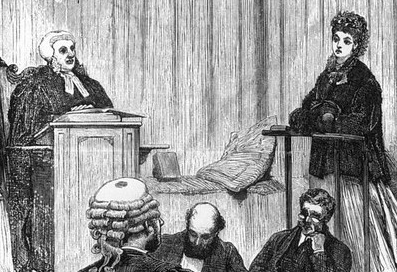
At this time, magistrates believed that court work would be too difficult and unpleasant for these women to deal with. Despite this, the Police Court Mission was formed and became a success in many towns across the country. It is even recorded that magistrates were said to put cases on hold until a Missionary was present to provide support and advice.
Such was the Mission’s success, that eventually a Bill was passed in the House of Commons – the Probation of Offenders Act. This allowed the appointment of official Probation Officers. Almost all the BWTA Missionaries went on to become Probation Officers.
Despite many advancements being made in this area at the time, such as the appointment of women Police Officers and the instigation of specific Children’s Courts, the 1926 article concludes that there was still much work to be done.
Branch members were encouraged to reach out to smaller courts where Probation Officers were not already in place. They believed there were still many opportunities for this valuable work. Mrs Campbell writes ‘No work….can have a richer reward than the knowledge that we have helped some tempted and suffering one back to home, happiness and the possibility of leading a purer and better life’.

The Crystal Palace was a glass and iron exhibition building originally erected in Hyde Park, London, to house the Great Exhibition of 1851. After the exhibition it was rebuilt in Sydenham Hill.
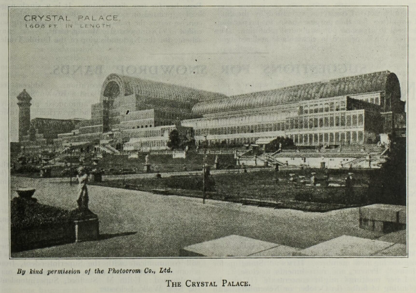
Crystal Palace
On the first day of July in 1926 there was a temperance demonstration and National Temperance Fete at the Crystal Palace. Women of the NBWTAU were invited to attend and joined in the vast Concert Hall of the Palace for a Devotional Hour including singing led by the powerful organ. Miss Agnes Slack, President of the NBWTAU was Chair and made an address to the audience, alongside the Bishop of Woolwich and other guests and speakers.
A temperance film was shown twice during the day, showing the scientific basis of the work for temperance reform. Awards were presented at the Children’s Concert, including the Challenge Shield. This was an award presented to branches of the NBWTAU for the highest number of new members achieved during the year.

Every month the Unions and Branches of the NBWTAU sent in reports providing a snapshot of the work they were undertaking across the country.
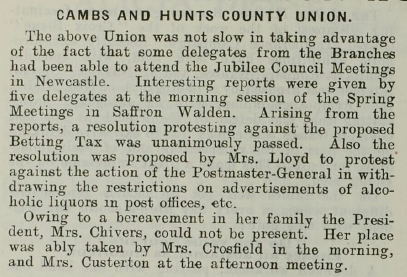
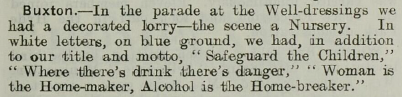

The women of the NBWTAU recognised that children were the future of the temperance movement and the members of the future, so there were dedicated departments for both children and younger women.
First started in 1905 under the name ‘White Ribbon Tiny Tots’, the name of the children’s department was then changed to ‘Little White Ribboners’. The children who were enrolled by their mothers, had their own safety pin badge to wear to show they were regarded as ‘embryo’ White Ribboners, the temperance campaigners of the future.
In 1926 congratulations were offered to the Little White Ribboners of Yorkshire, who were awarded the banner given to the county which had made the best all-round progress during the year.

Stories for children with a temperance moral were included in the monthly magazine. It was a way of reaching out to children to warn them of the dangers of alcohol.
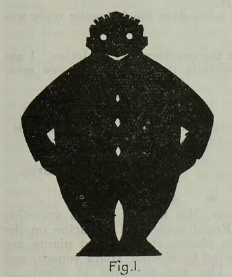
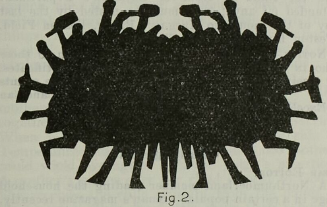
These stories were written by Margaret Baker and were regularly published in the magazine across the 1920’s and 30’s. This one, titled ‘Old Mr Alcohol’, includes graphic illustrations to enhance the story telling.
Old Mr Alcohol
A Street Fight
‘Old Mr Alcohol’ talks about the mischief he gets up to on a daily basis, such as the man who gives him all his money instead of giving it to his wife and children. It was a lesson to show the unrest and unemployment that the effects alcohol could cause in society. These tales were told in a way that children and young people could understand, about the perils of drinking alcohol.

The first motor cars in the UK appeared in the 1890’s, so motoring was still relatively early in the 1920’s and mainly the reserve of the wealthy. However, by the 1920’s a shift was beginning with cheaper mass-produced motor cars which were accessible to the growing middle class.
It wasn’t until the Criminal Justice Act of 1925 was introduced, that it became illegal to be drunk while in charge of a mechanically propelled vehicle on a public road. Before this date an older law banned drunkenness while in charge of horses, carriages, or steam engines, but did not specifically target cars.
An increase in the nu mber of motorised vehicles on the road in the 1920’s created a surge in the number of motoring accidents. Motoring and drink driving was a new area of concern for temperance campaigners.
According to campaigners, if you were wealthy enough to have both a motor car and a chauffeur to drive it, then surely it would be better to employ an abstaining man for the job, if you valued your life. The only means the police had to prove intoxication at the time, was if the driver looked visibly drunk or had lost control. Breath tests and blood tests for alcohol limits did not exist until decades later.

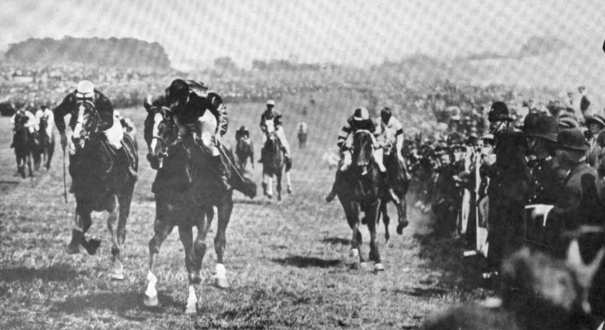 The NBWTAU saw a new opportunity to spread the temperance message by reaching out to people attending the horse racing on the Epsom Downs for the annual Derby. It was a place where huge crowds gathered for gambling and heavy drinking.
The Epsom Branch of the NBWTAU pitched up their refreshment tent on ‘The Hill’, an area which attracted working class crowds at the races. They provided non-alcoholic refreshments including hot tea, cool lemonade and fresh milk, as an alternative to the usual offerings at the bars. After being viewed with some mistrust to start with, the article states that they soon ‘lived that down’.
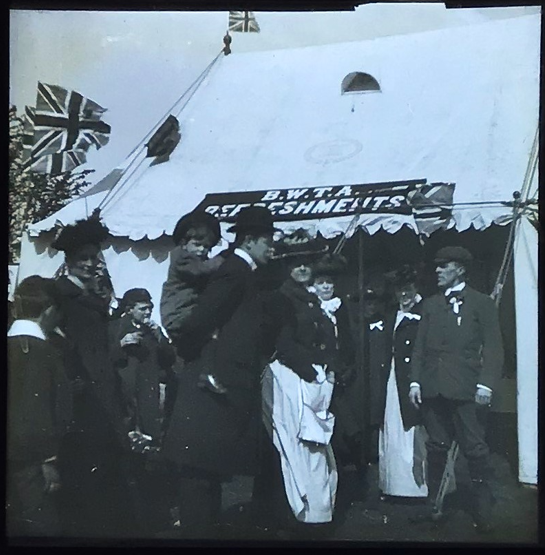
Earlier period BWTA refreshment tent
There was heavy rain at the races and the women were able to show themselves as friends and helpers in other ways, sending for dry clothing and listening to racegoers ‘tales of woe’.
It was said that the advent of the woman racegoer had made a great difference to the atmosphere. The bookmakers said they had never seen a ‘cleaner’ Derby, from a moral standpoint. They record that the women of the refreshment tent were met with only courtesy from everyone, despite also freely distributing temperance literature alongside their refreshments.
It must have taken some courage to set up the refreshment tent at a place where they may have experienced a negative reaction to their presence, but it seems to have been a success, and the article states they were asked by many to attend the races again the following year.

There was also space within the magazine for words of wisdom regarding a problem over trifle! Even traces of liquor in food were seen to have the potential to trigger further interest in alcohol, so the women of the NBWTAU were keen to promote alcohol free recipes and these were often included in the magazine.
As abstainers from alcohol, what should members of the NBWTAU do if a well-meaning friend or neighbour offered them trifle laced with alcohol?
This was a question posed to readers and they were asked to think about how this situation could be handled without causing offence. Miss Williamson of the Guildford Branch offered her solution to this problem –
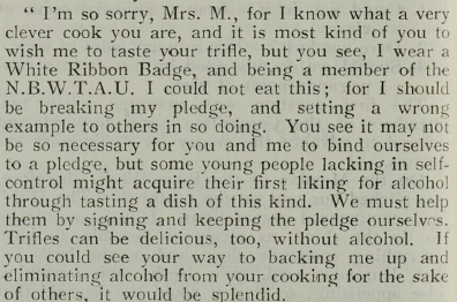
Members were assured that by sticking to their principles, they would be helping others to see the potential risks of alcohol, even through something as seemingly insignificant as tasting a portion of trifle, particularly if it was laced with sherry!
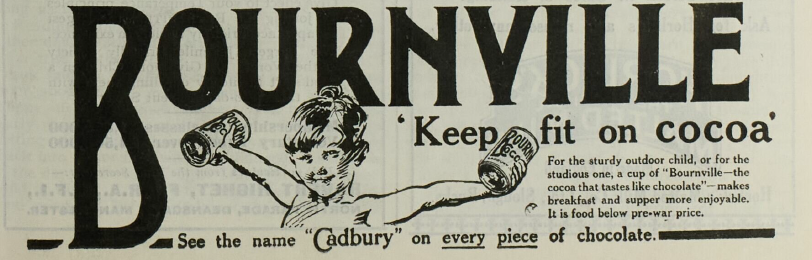
During this period the magazine contained monthly advertisements, depicting certain foods and beverages as temperance friendly. These adverts often included dubious claims regarding health benefits. The one above states that you can ‘Keep fit on cocoa’ and shows an apparently strong and healthy-looking child lifting up tins of cocoa.
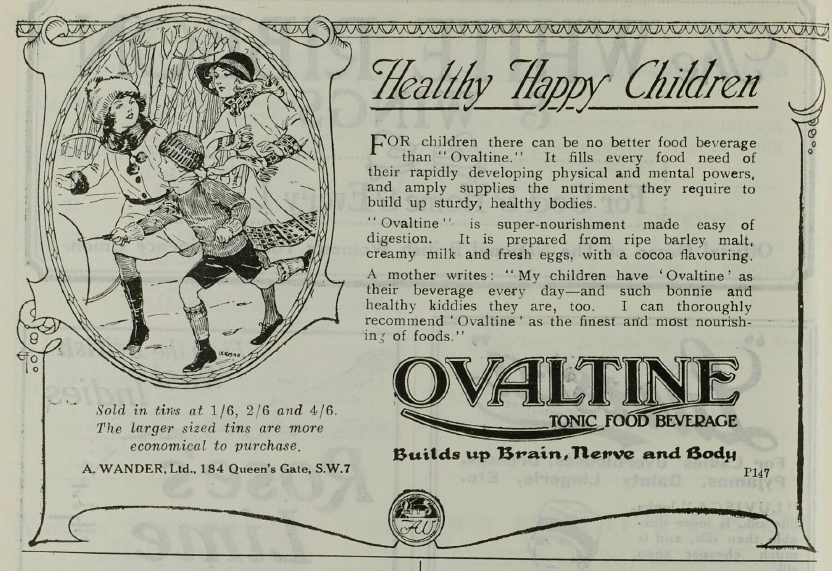
Ovaltine was another drink advertised in The White Ribbon and Wings with the claim that it ‘Builds up Brain, Nerve and Body’ and was a ‘Tonic Food Beverage’.
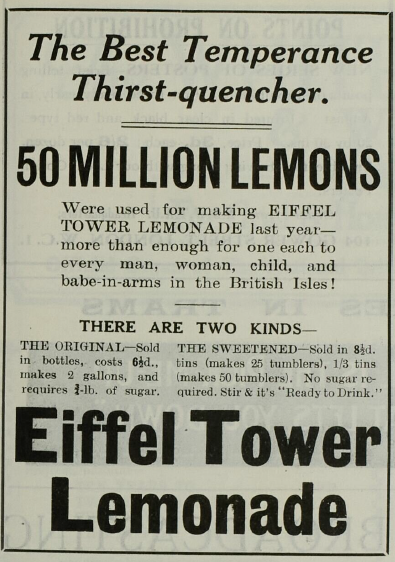
Eiffel Tower Lemonade was advertised as a temperance beverage – ‘The Best Temperance Thirst-quencher. It was apparently made with 50 million lemons in a year!
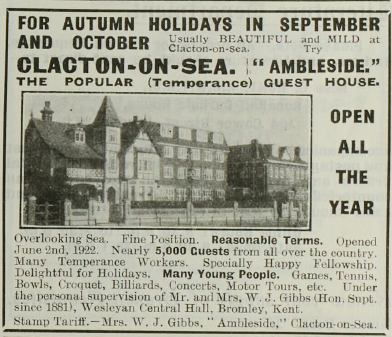
Temperance drinks such as Dandelion and Burdock were popular non-alcoholic beverages and would have been served in temperance bars, hotels and guest houses across the country. Only adverts aligning with temperance principles would have been included in the magazine.
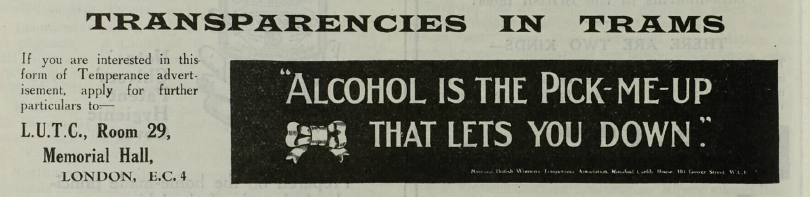
This is just a brief look at the magazine of the National British Women’s Total Abstinence Union, but it played an important role in reaching out with news of their temperance campaign.
The President, Agnes Slack, shared the message, ‘We know our Magazine will do great good….It is a big thing to reach so many thousands of women, and through them their homes, husbands, and children, and often a wider circle through lending….’
The White Ribbon Association today continues to work with the community to provide awareness of the effects of drinking, gambling, smoking and drugs.
Maybe you would you have signed the pledge back in 1926 or perhaps one of your ancestors was a member of a temperance society. Many of our old periodicals have been digitised, including those dating back to the 1880’s. They are available to view for research purposes during a pre-arranged visit to us. They provide not only an insight into the Temperance Movement but societal change over the decades and the lives of women. Contact us at archives@white-ribbon.org.uk
If you would like to find out more about the history of the British Women’s Temperance Association, please visit https://white-ribbon.org.uk/our-history/
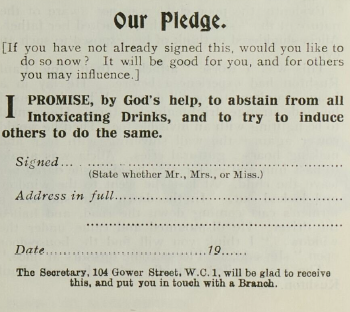
BWTA Pledge from 1926